
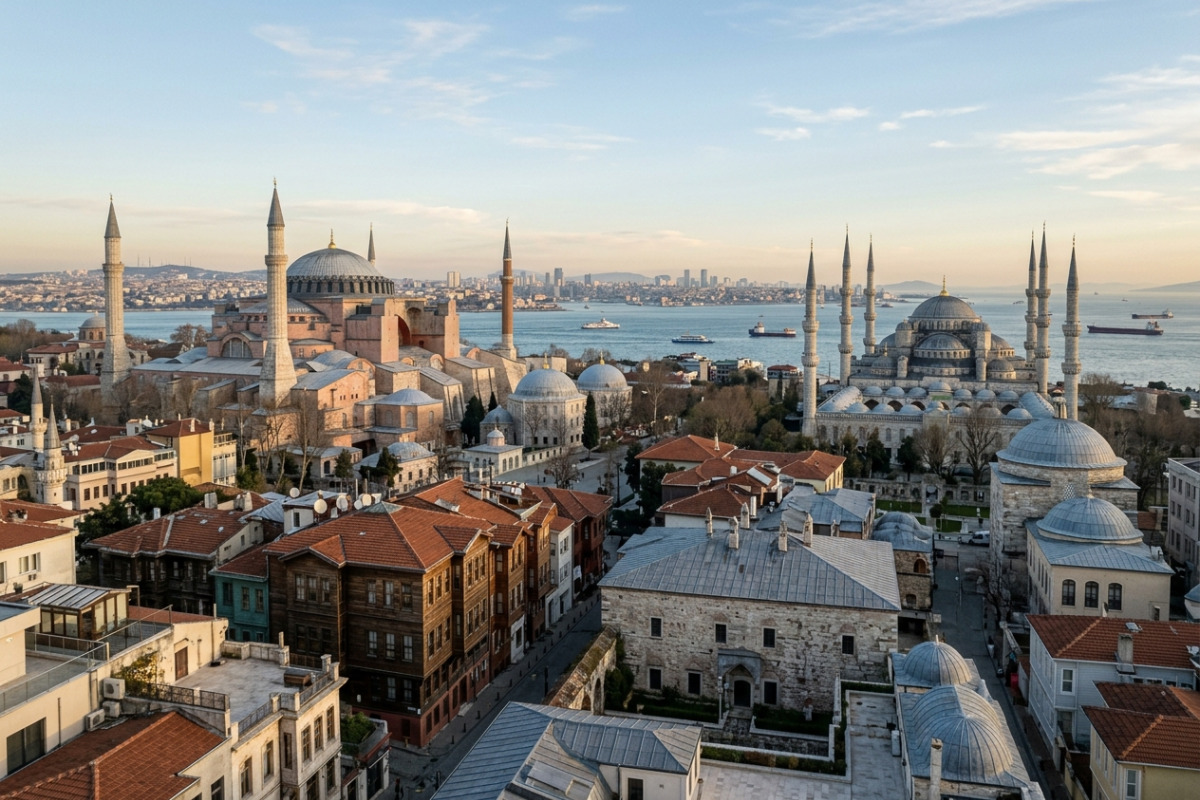
When you stand before Hagia Sophia or a quiet neighborhood fountain, you are looking at palimpsests of time: built, rebuilt and reused. Learning to read Istanbul historic landmarks helps you recognize centuries of cultural exchange, engineering choices and political statements hidden in stone and mortar.
Istanbul Historic Landmarks: layers you can spot on a first walk
The most visible layer is often the last major reconstruction, but a careful eye will reveal earlier phases: reused columns, different mortar textures, and mismatched decorative bands. These clues tell you which empire, workshop or natural disaster shaped the site, and they reveal how inhabitants adapted older spaces to new religions or purposes.
Start by examining joins between masonry courses, the profiles of windows and the direction of decorative carving. Those small details persist across restorations and convey a site's biography more reliably than guidebook narratives. If you approach a landmark with curiosity about building techniques, every wall becomes evidence.
Public waterworks: cisterns, fountains and aqueduct signals
Water infrastructure is a powerful lens on urban continuity. Byzantine cisterns like the Basilica Cistern reveal how water storage enabled imperial life, while Ottoman fountains (sebils) emphasize public benefaction and social ritual. Aqueduct arches, such as the Valens Aqueduct in the heart of the city, tell you where supply networks once entered and traversed urban Istanbul.
Observe finishing and access points: vaulted brick and waterproof mortar indicate cisterns, while ornate stone facades with inscription panels usually mark Ottoman charitable fountains. Comparing those features helps you decide whether a lower chamber was for storage, ritual ablution or a tactical defense point.
Practical checklist for water-related landmarks
- Look for vaulting ribs and buttresses—signs of underground chambers.
- Find written panels or stone plaques; they often record donors and dates.
- Note proximity to trade routes—water arteries followed commerce and neighborhoods.
Material clues: marble, brick, spolia and what they mean
Materials tell complex stories. Spolia—reused columns and capitals—signal deliberate appropriation of earlier prestige, while a sudden change from ashlar stone to brick may mark military repair after an earthquake. Marble often denotes ceremonial spaces; rough-hewn stone indicates practical or defensive architecture.
Understanding these choices helps you interpret the social priorities behind construction. For instance, a mosque with ornate marble on its prayer hall but reused Byzantine capitals in its courtyard speaks to both a desire for continuity and the pragmatics of material availability.
| Material/Feature | Typical Era | What to infer |
| Polished marble | Antique & Byzantine | Ceremonial importance, access to quarries or reuse of monuments |
| Roman bricks with mortar bands | Roman/Byzantine | Early imperial building techniques, often foundational courses |
| Cut limestone (Küfeki) | Medieval to Ottoman | Stable reconstruction, monumental facades or defensive works |
Signs of use: wear patterns, inscriptions and ritual traces
Wear patterns tell social stories: smoothed doorways reveal repeated passage, while stone benches with polished armrests mark habitual rest spots. Inscriptions and foundation plaques pinpoint dates and patrons—and when legible, they let you map patronage networks across neighborhoods.
Ritual traces—orientation of prayer niches, traces of old floors, or blocked arches—show how spaces shifted function. A church turned mosque may retain its apse-like profile or underlying floor mosaics; noticing these layers lets you reconstruct spiritual geography from fragments.
How to document what you find
Use a small notebook or your phone to sketch alignment lines, note inscriptions and photograph mortar joints at right angles for clarity. Record the exact location and orientation to compare sites later; mapping a few features on your phone will help you identify patterns across the city.
Designing a thematic walk: make landmarks tell a story
Instead of hopping from famous site to famous site, build a thematic route that ties material, function or period together. For example, a "water heritage" walk can link an aqueduct remnant, a restored sebil, a cistern and a marketplace fed by those supplies. This approach transforms disparate sights into a coherent narrative about urban life.
Plan 2–4 stops per hour to allow close observation and short explanations. Include a quiet spot for notes and a cafe where you can compare observations. This slower pace reveals details missed in typical rush-hour itineraries and yields richer photos and memories.
- Choose a clear theme (materials, water, religious transformations).
- Sequence sites geographically to minimize walking and maximize observation time.
- Bring reference images or a short checklist based on this article to guide your inspections.
"The city is a text written over centuries; each stone is an annotation that helps us read what people wanted to remember or erase."
Summary & next steps
Reading Istanbul historic landmarks requires patience, a few basic observational skills and a willingness to let material evidence shape your story of the city. By focusing on layers—water systems, reused materials, inscriptions and wear—you move beyond snapshots and into interpretive travel that rewards curiosity.
Ready to try a themed route? See our thematic itineraries for suggested walks and printable checklists to take with you. Start with one neighborhood, slow down, and let the stones speak.