
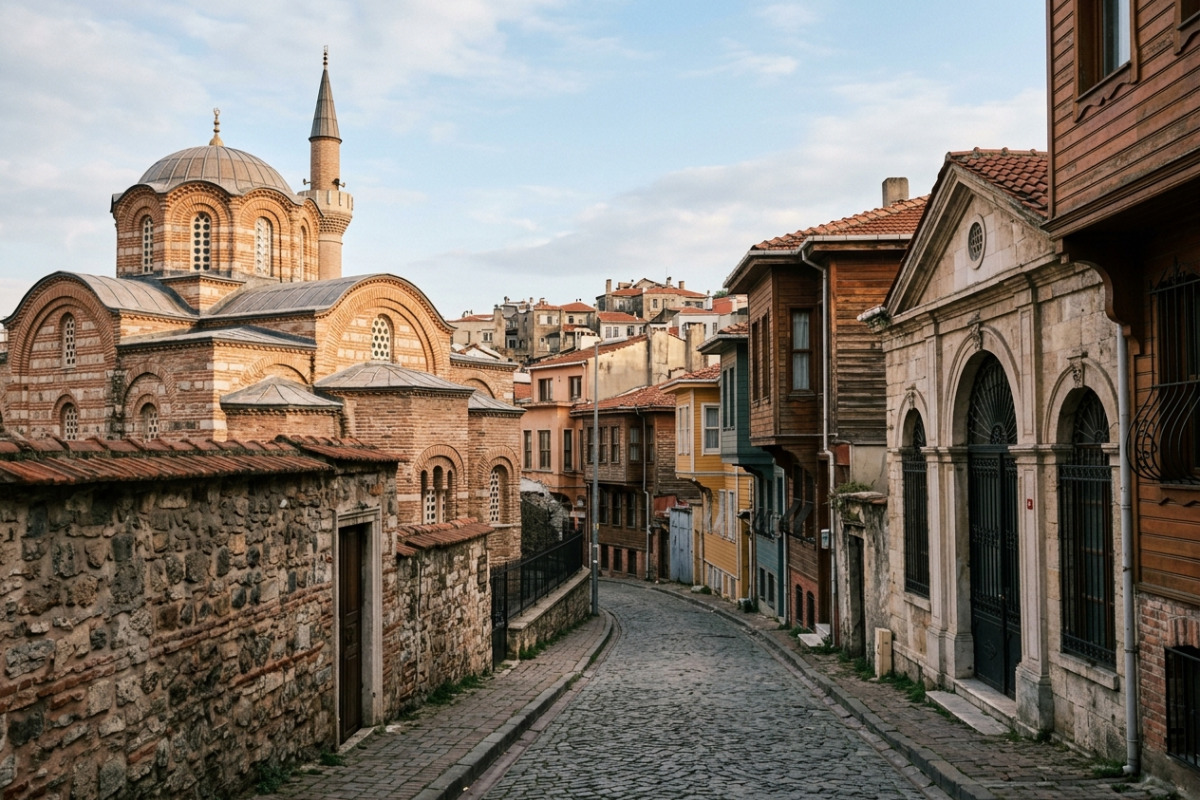
Istanbul churches and synagogues reveal layers of the city’s multi-confessional past and thriving present. If you want to move beyond single-site visits and understand how faith communities shaped neighborhoods, this practical guide helps you plan respectful, rewarding visits and points to congregations and streets where history still feels alive.
Why Istanbul churches and synagogues matter for visitors
These religious sites are not only places of worship but also living archives: murals, inscriptions and funerary stones often record migrations, trade links and daily life across centuries. Visiting them lets you see styles ranging from Byzantine iconography to Ottoman-era Armenian and Sephardic renovations, which together tell a more textured story than any single monument can.
Beyond architectural interest, many churches and synagogues maintain active communities. Observing services, concerts or community events offers insight into continuity and adaptation — how congregations preserve rituals, language (such as Ladino or Greek) and charity work in a changing city. That social dimension is as important as the stones themselves.
Practical visiting tips for respect and access
Before you arrive, check opening hours and whether the place receives visitors. Crucially, most synagogues in Istanbul require prior authorization (usually via an online application form and passport copy) at least 2-4 days in advance for security reasons. Many churches also have limited visiting hours outside of morning mass.
Dress modestly (shoulders and knees covered) and always ask before photographing—some interiors, especially during services or in specific Jewish traditions, are strictly off-limits to cameras. If you plan to attend a service, arrive early and follow the congregation's lead.
- Contact ahead: Visit the official websites of the Turkish Rabbinate or relevant Patriarchates to confirm access.
- Security: Expect rigorous security screenings and ID checks at all synagogues and major churches.
- Donations: Many congregations rely on visitors to support maintenance; modest donations are appreciated.
- Photography: Flash photography is generally prohibited to protect ancient icons and manuscripts.
Neighborhoods where churches and synagogues cluster
Exploring by neighborhood gives you context: you’ll notice how places of worship sit within everyday urban fabric — next to bakeries, workshops and homes. Walkable neighborhoods let you string multiple visits into a half-day loop.
Fener and Balat
This area is the historic heart of the Greek Orthodox and Jewish communities. Fener houses the Ecumenical Patriarchate of Constantinople (St. George’s Cathedral), the spiritual center of Orthodox Christianity. Nearby in Balat, the 15th-century Ahrida Synagogue (requires prior booking) and the Bulgarian Iron Church (St. Stephen) showcase the area's incredible diversity. Walk slowly to spot carved lintels and Hebrew inscriptions above old doorways.
Kuzguncuk
Kuzguncuk on the Asian shore is a symbol of interfaith harmony. Here, the Ayios Yeoryios Greek Orthodox Church, the Surp Krikor Lusavoriç Armenian Church, and the Beth Yaakov Synagogue stand almost side-by-side with the neighborhood mosque. This unique proximity reflects a long tradition of coexistence that is still celebrated by locals today.
Galata and Beyoğlu
Beyoğlu’s layered history includes the majestic St. Anthony of Padua (the city's largest Catholic church) and the Neve Shalom Synagogue. This area reflects 19th-century cosmopolitan life: look for the Ashkenazi Synagogue near the Galata Tower and various Protestant chapels tucked away in consulate grounds or side streets.
What to notice: architecture, inscriptions and community traces
When you step inside, look up: ceilings and iconostases often preserve iconography or Hebrew/Greek/Armenian inscriptions that locate the congregation in time. Materials reveal later interventions — for example, 19th-century European-funded Baroque restorations in otherwise Byzantine-style structures.
“Stones speak if you know their language: dates, donor names and languages etched into walls link faith to trade, migration and identity.”
Also check adjacent spaces: many sites include vakıf (foundation) buildings, schools, or community kitchens. Conservation plaques sometimes list restoration sponsors, highlighting modern efforts to keep these historic buildings active and safe.
Supporting preservation and engaging with communities
Many congregations fund repairs through cultural events. Attending a classical music concert at Aya Irini or a choir performance in a neighborhood church are practical ways to help. Some communities also offer publications about their specific history which can be purchased on-site.
Summary & plan your visit
Exploring Istanbul's religious heritage by neighborhood offers a deep dive into the city's soul. Start with one area, respect local protocols, and remember that these are active sanctuaries. For more detailed addresses and suggested walking routes, check our Churches & Synagogues section. Always carry a valid ID and leave room for a conversation with a local—those moments often provide the best historical insights.